 By Vineet Kumar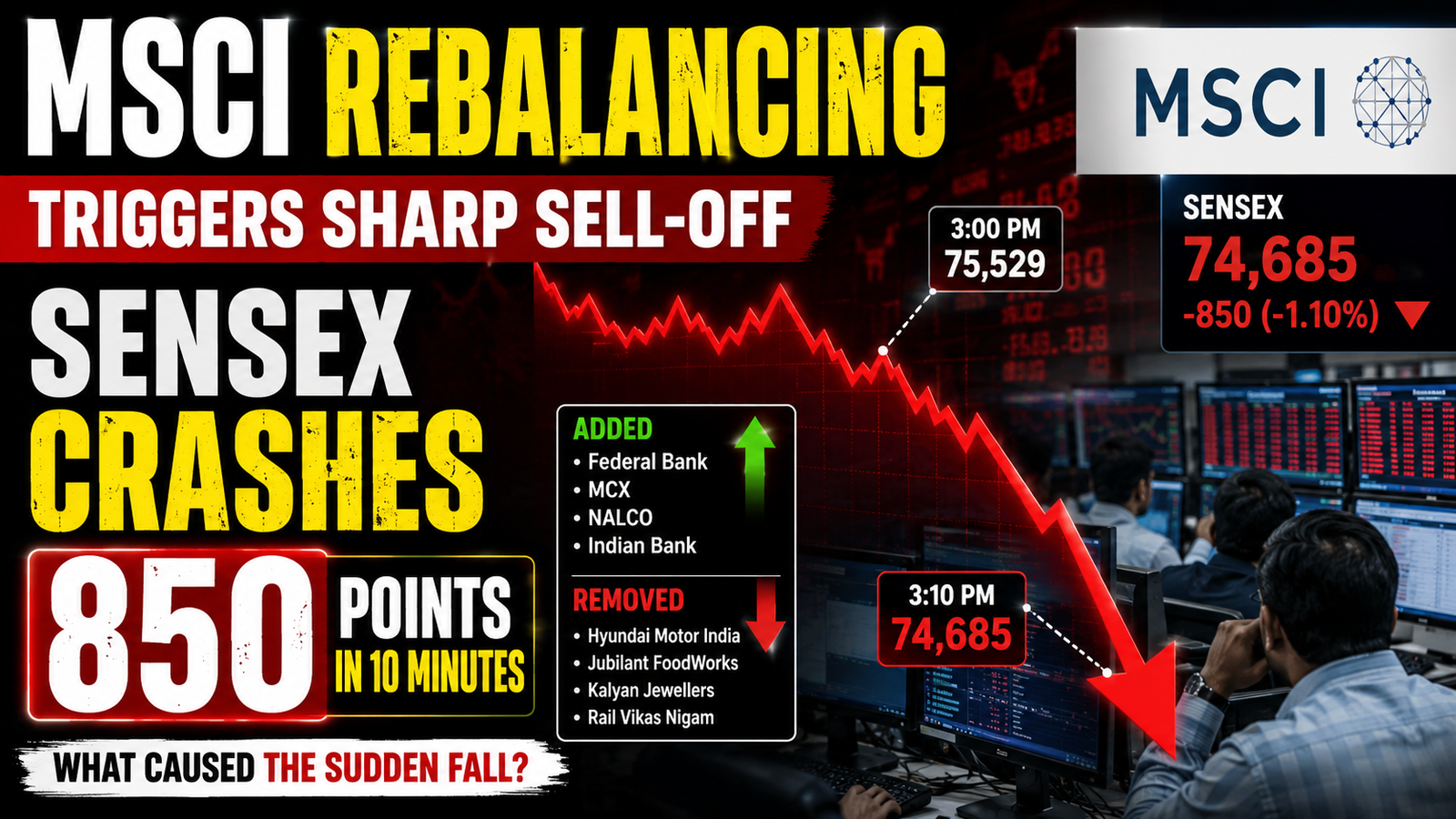
Market Overview: MSCI Rebalancing and Indian Equities
Indian stock markets experienced significant volatility on May 29, characterized by the BSE Sensex declining approximately 850 points within a ten-minute window during the final hour of trading. This sharp movement was primarily attributed to the implementation of MSCI’s latest index rebalancing, which prompted substantial transaction volumes from global passive funds.
The selling pressure intensified around 3:00 PM as adjustments to match the revised index composition took effect. Large-scale institutional trades entered the market, resulting in notable price fluctuations across various sectors.
MSCI Index: Additions and Removals
MSCI has confirmed the inclusion of the following Indian equities into its Global Standard Index:
- Federal Bank
- Multi Commodity Exchange of India (MCX)
- National Aluminium Company (NALCO)
- Indian Bank
Concurrently, the following securities have been removed from the index:
- Hyundai Motor India
- Jubilant FoodWorks
- Kalyan Jewellers
- Rail Vikas Nigam (RVNL)
Market analysts estimate that this rebalancing could result in net outflows of approximately ₹8,000 crore from the Indian equity market.
Impact of Passive Fund Flows
Projections indicate that Federal Bank may attract passive inflows of roughly $491 million, followed by MCX ($373 million), NALCO ($308 million), and Indian Bank ($209 million). Conversely, stocks removed from the index are anticipated to face selling pressure, with Hyundai Motor India potentially seeing outflows of $281 million.
Strategic Significance of MSCI Rebalancing
MSCI indices serve as critical benchmarks for global exchange-traded funds (ETFs) and passive investment vehicles. Any modification in index weightage or composition necessitates portfolio adjustments by these funds, often leading to short-term market volatility.
While India’s weight in the MSCI Global Standard Index remains stable at 12.3%, its share in the MSCI Emerging Markets Index has seen a gradual decline from the peak levels recorded in 2024.
Market Outlook and Analysis
Financial experts suggest that the recent downturn was a technical event driven by rebalancing requirements rather than a shift in fundamental market health. As passive fund adjustments conclude, market focus is expected to return to corporate earnings, macroeconomic data, and global trends.
Investors are encouraged to maintain a focus on long-term fundamentals and exercise caution regarding impulsive decisions driven by temporary, index-related volatility.
Disclaimer: This post is strictly for educational and informational purposes only. Trading Thought is not a SEBI registered advisor. The analysis provided does not constitute financial, investment, or trading advice. Please consult with a certified financial professional before making any investment decisions.