 By Vineet Kumar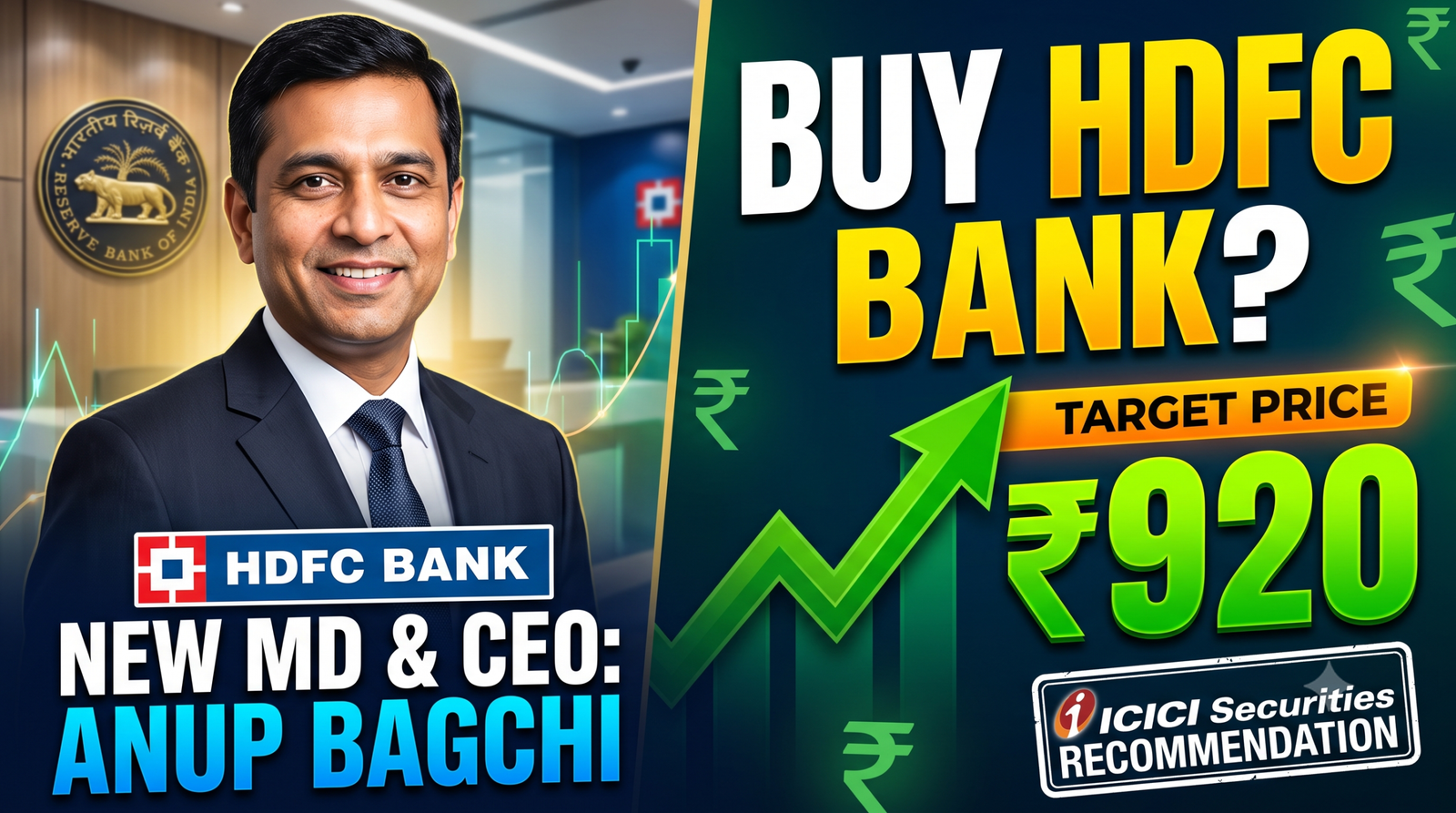
Meta Description: ICICI Securities sets a Rs 920 target for HDFC Bank shares following the RBI’s approval of Anup Bagchi as MD & CEO. Read our comprehensive 2026 analysis on HDFC Bank’s stock, leadership change, and future growth prospects.
The Indian banking sector is witnessing a monumental phase of transformation, and at the heart of this evolution is the country’s largest private-sector lender, HDFC Bank. In a highly anticipated move that has sent ripples of optimism through Dalal Street, leading domestic brokerage firm ICICI Securities has reiterated its bullish stance on HDFC Bank. In its comprehensive research report dated October 4, 2026, the brokerage maintained a resounding ‘Buy’ rating on the banking behemoth, setting an ambitious and highly lucrative target price of Rs 920 per share.
This upgraded outlook is not merely a product of favorable macroeconomic conditions but is deeply anchored in a landmark leadership transition. The Reserve Bank of India (RBI) recently gave its official nod for the appointment of Anup Bagchi as the new Managing Director and Chief Executive Officer (MD & CEO) of HDFC Bank. This seamless transition at the very top of the hierarchy is being viewed by analysts, institutional investors, and retail shareholders as a massive catalyst for the bank’s next major growth cycle.
Here is a deep dive into why ICICI Securities is highly optimistic about HDFC Bank, what the new leadership brings to the table, and why the Rs 920 target price represents a compelling narrative for long-term investors.
The Catalyst: Anup Bagchi Takes the Helm
The banking industry is as much about trust and leadership as it is about numbers and margins. The RBI’s approval of Anup Bagchi as the MD & CEO of HDFC Bank marks a fascinating cross-pollination of top-tier talent within India’s private banking duopoly.
Bagchi is a veteran of the financial services industry with an impeccable track record. Before taking the reins at HDFC Bank, he successfully served as the MD & CEO of ICICI Prudential Life Insurance, where he was instrumental in navigating the complex post-pandemic insurance landscape, driving digital adoption, and significantly boosting value of new business (VNB) margins. Prior to his stint in insurance, Bagchi was an Executive Director at ICICI Bank, where he played a pivotal role in expanding the bank’s retail footprint, enhancing customer experience, and integrating technology into everyday banking operations.
For HDFC Bank, bringing in a leader of Bagchi’s caliber signifies a strategic pivot. While HDFC Bank has traditionally relied on homegrown talent for its top executive roles, Bagchi’s appointment brings a fresh, dynamic perspective. His deep-rooted expertise in retail banking, wealth management, and insurance perfectly aligns with HDFC Bank’s post-merger strategy—which heavily focuses on cross-selling financial products to its massive, combined customer base. ICICI Securities notes in its report that Bagchi’s execution-focused leadership style is exactly what HDFC Bank needs to consolidate its market leadership and accelerate its loan book growth over the next decade.
Decoding the Rs 920 Target Price
ICICI Securities’ target price of Rs 920 is backed by a robust fundamental analysis of HDFC Bank’s balance sheet, its margin trajectory, and its overarching growth strategy. The Rs 920 target implies a significant upside potential from the stock’s current trading levels, offering a lucrative opportunity for value investors.
Several key factors contribute to this optimistic valuation:
1. Realization of Post-Merger Synergies: By 2026, the dust has fully settled on the historic mega-merger between HDFC Ltd and HDFC Bank. The initial friction regarding regulatory reserves (CRR and SLR requirements) and margin compression has largely been absorbed. ICICI Securities highlights that the bank is now entering the “synergy realization” phase. The bank has successfully begun leveraging its massive mortgage portfolio to cross-sell unsecured loans, credit cards, and insurance products, leading to a higher wallet share per customer.
2. Stabilization of Net Interest Margins (NIMs): One of the primary concerns for HDFC Bank investors in recent years was the pressure on Net Interest Margins due to the high cost of borrowing and the integration of the housing finance giant’s lower-yielding book. However, the ICICI Securities report suggests that the worst of the margin compression is in the rearview mirror. With a stabilizing interest rate environment in late 2026 and an aggressive push toward low-cost CASA (Current Account Savings Account) deposits, HDFC Bank’s NIMs are poised for a steady expansion, directly boosting the bottom line.
3. Asset Quality Remains pristine: HDFC Bank has historically commanded a premium valuation largely due to its fortress-like balance sheet and pristine asset quality. Even amid global macroeconomic uncertainties, the bank’s Gross Non-Performing Assets (GNPA) and Net Non-Performing Assets (NNPA) remain among the lowest in the industry. ICICI Securities’ report projects that with enhanced AI-driven underwriting standards under the new leadership, credit costs will remain negligible, ensuring high Return on Assets (RoA) and Return on Equity (RoE).
Expanding the Digital Footprint
In 2026, the battleground for banking supremacy is predominantly digital. HDFC Bank has invested billions in upgrading its IT infrastructure, moving away from legacy systems to a more agile, cloud-based architecture. Anup Bagchi’s prior success in championing digital-first initiatives at ICICI Prudential is expected to translate into rapid tech execution at HDFC Bank.
ICICI Securities points out that the bank’s mobile applications and corporate banking portals have seen massive upgrades, resulting in minimal downtime and a frictionless user experience. This digital leap not only reduces the customer acquisition cost (CAC) but also allows the bank to penetrate deeper into Tier-2, Tier-3, and rural Indian markets without the heavy capital expenditure of setting up physical branches.
The Macro View: India’s Credit Boom
To understand the Rs 920 target, one must look at the broader Indian economic landscape in 2026. India remains one of the fastest-growing major economies in the world. With rising per capita income, urbanization, and a massive demographic dividend, the demand for credit—both retail and corporate—is surging.
HDFC Bank, controlling a massive chunk of the systemic liquidity, is perfectly positioned to capture this credit boom. Whether it is funding large-scale infrastructure projects, extending working capital to the booming MSME sector, or providing consumer loans to the aspirational Indian middle class, HDFC Bank’s omni-channel presence makes it the go-to lender. ICICI Securities expects the bank’s advances to grow at a healthy compound annual growth rate (CAGR) of 16-18% over the next few years.
Risks and Considerations for Investors
While the ‘Buy’ rating and the Rs 920 target present a rosy picture, investors must remain cognizant of inherent market risks. The banking sector is highly sensitive to macroeconomic shocks, changes in RBI’s monetary policy, and global liquidity conditions. A sudden spike in inflation leading to prolonged high interest rates could dampen credit demand. Furthermore, the transition of leadership, while viewed positively, always carries execution risks. If the strategic alignment under Anup Bagchi faces internal friction, it could temporarily slow down the bank’s momentum.
Conclusion
HDFC Bank has long been considered a portfolio staple for investors seeking compounding wealth in the Indian equity markets. The recent research report by ICICI Securities reaffirming a ‘Buy’ rating with a target of Rs 920 serves as a strong testament to the bank’s enduring legacy and bright future.
The RBI’s approval of Anup Bagchi as MD & CEO acts as the perfect catalyst, marrying robust institutional fundamentals with visionary, execution-oriented leadership. As the bank successfully navigates its post-merger landscape, expands its digital horizons, and capitalizes on India’s structural credit growth, HDFC Bank is well on its way to rewarding its shareholders handsomely. For investors with a medium to long-term horizon, this presents a compelling entry point into India’s premier banking institution.
Disclaimer: This post is strictly for educational and informational purposes only. Trading Thought is not a SEBI registered advisor. The analysis provided does not constitute financial, investment, or trading advice. Please consult with a certified financial professional before making any investment decisions.