 By Vineet Kumar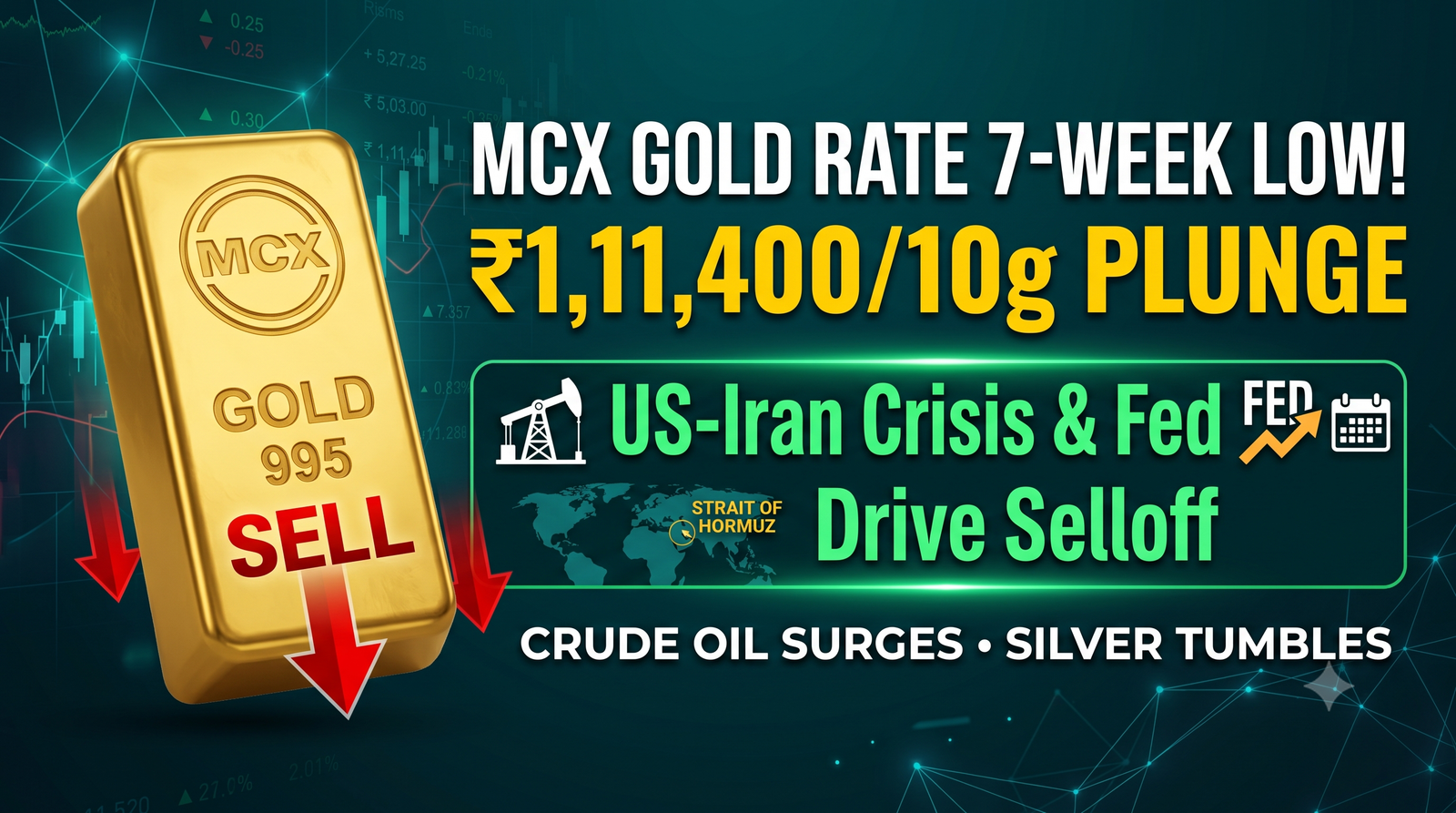
Gold prices experienced a sharp decline this week, plunging 4% on Monday to hit a seven-week low in the Indian domestic market. The sustained deadlock between the US and Iran over the Strait of Hormuz has kept energy markets red-hot, maintaining intense pressure on the US Federal Reserve to implement further interest rate hikes.
The Geopolitical Impasse and Energy Market Spillover
Taking cues from the international spot market—where bullion dropped to around $4,125 an ounce—domestic prices on the MCX (Multi Commodity Exchange) tumbled, trading around ₹1,11,400 per 10 grams.
The geopolitical conflict between Washington and Tehran, which erupted in late February, continues to disrupt global energy flows. With no resolution in sight for the Strait of Hormuz blockade, crude oil prices have extended their gains, keeping imported inflation fears elevated for markets like India.
Diplomatic channels remain stalled. Iranian officials have privately expressed pessimism about reaching any breakthrough to end hostilities before the US midterm elections this November. This prolonged friction has a dual impact on commodities: driving up energy costs while suppressing non-yielding safe-haven assets like gold.
Why the US Fed Could Hike Rates in October
The immediate consequence of surging global energy costs is the threat of embedded inflation, forcing the US central bank into a corner. What happens with the Fed directly impacts Indian bullion rates:
- Rate Hike Probability: Rising oil prices are adding pressure on the Fed to tighten monetary policy further. Markets are currently pricing in a roughly 70% probability of an interest rate hike at the October policy meeting.
- Treasury Yield Surge: The ongoing bond divestment has accelerated over the past month, driving up borrowing costs. A steep rise in US Treasury yields makes holding zero-yield assets like gold significantly less attractive to institutional investors, prompting massive sell-offs that drag down domestic MCX prices.
- Monthly Performance: Following the Fed’s aggressive stance earlier this year, gold is currently down around 7% for the month of September.
Broader Precious Metals Market
The bearish sentiment has heavily spilled over into the broader domestic precious metals complex:
- Silver: Slid nearly 6% in the previous session in global markets (falling to $60.64/oz), which translates to a sharp drop on the MCX, consolidating around ₹1,63,800 per kilogram.
- Platinum & Palladium: Platinum edged lower alongside gold, while palladium bucked the overall trend with a modest 0.2% gain.
- Currency Impact (USD/INR): The US Dollar Index remained stable, hovering near its highest close since late July. A stronger dollar makes dollar-denominated commodities expensive, maintaining heavy downside pressure on Indian bullion imports.
Trading Thought Takeaway
As global markets brace for the November US midterm elections and monitor the ongoing Strait of Hormuz standoff, Indian bullion investors should prepare for continued volatility. Until global energy prices cool and the Fed signals a pause on rate hikes, MCX gold will likely face strong overhead resistance, struggling to find solid fundamental support to climb back from its recent lows. Traders should keep strict stop-losses on long positions in the current macroeconomic environment.
Disclaimer: This post is strictly for educational and informational purposes only. Trading Thought is not a SEBI registered advisor. The analysis provided does not constitute financial, investment, or trading advice. Please consult with a certified financial professional before making any investment decisions.